A Postman alternative that keeps your requests on your machine
GraphDagger's API Client does the daily work you keep Postman around for, requests, collections, auth, scripts, without an account, a cloud workspace or a sync prompt.
Postman grew from a REST client into a cloud platform, and the client now assumes the cloud: an account to sign into, workspaces that sync, and your internal API definitions living on someone else's servers. For a lot of engineering and IT teams that is a procurement conversation, not a tool choice.
GraphDagger's API Client is the tool choice. Build and send requests across every standard method with query, header and body editors, all body types from form-data to raw and binary, folder-based collections, full history with replay, and side-by-side request tabs that keep independent state so two endpoints compare in one view. Everything stays on your machine.
GraphDagger vs Postman, feature by feature
| Capability | Postman | GraphDagger |
|---|---|---|
| Account and sync | Account sign-in, cloud workspaces and sync | No account. Collections and history live locally |
| Protocols | HTTP, GraphQL, WebSocket, gRPC | HTTP, GraphQL, WebSocket, SSE and gRPC |
| Authentication | Broad auth helper support | OAuth2, AWS SigV4, JWT and Digest built in |
| Scripting | Pre-request and test scripts | Pre-request and test scripts in a sandbox |
| Code export | Code snippets per language | Code generation for 19 languages |
| Migration | Its own collection format | Imports Postman collections, plus Insomnia, OpenAPI, cURL and HAR |
| Beyond the client | API platform features in cloud tiers | A mock server, request flows, and 13 more diagnostic tools in the same app |
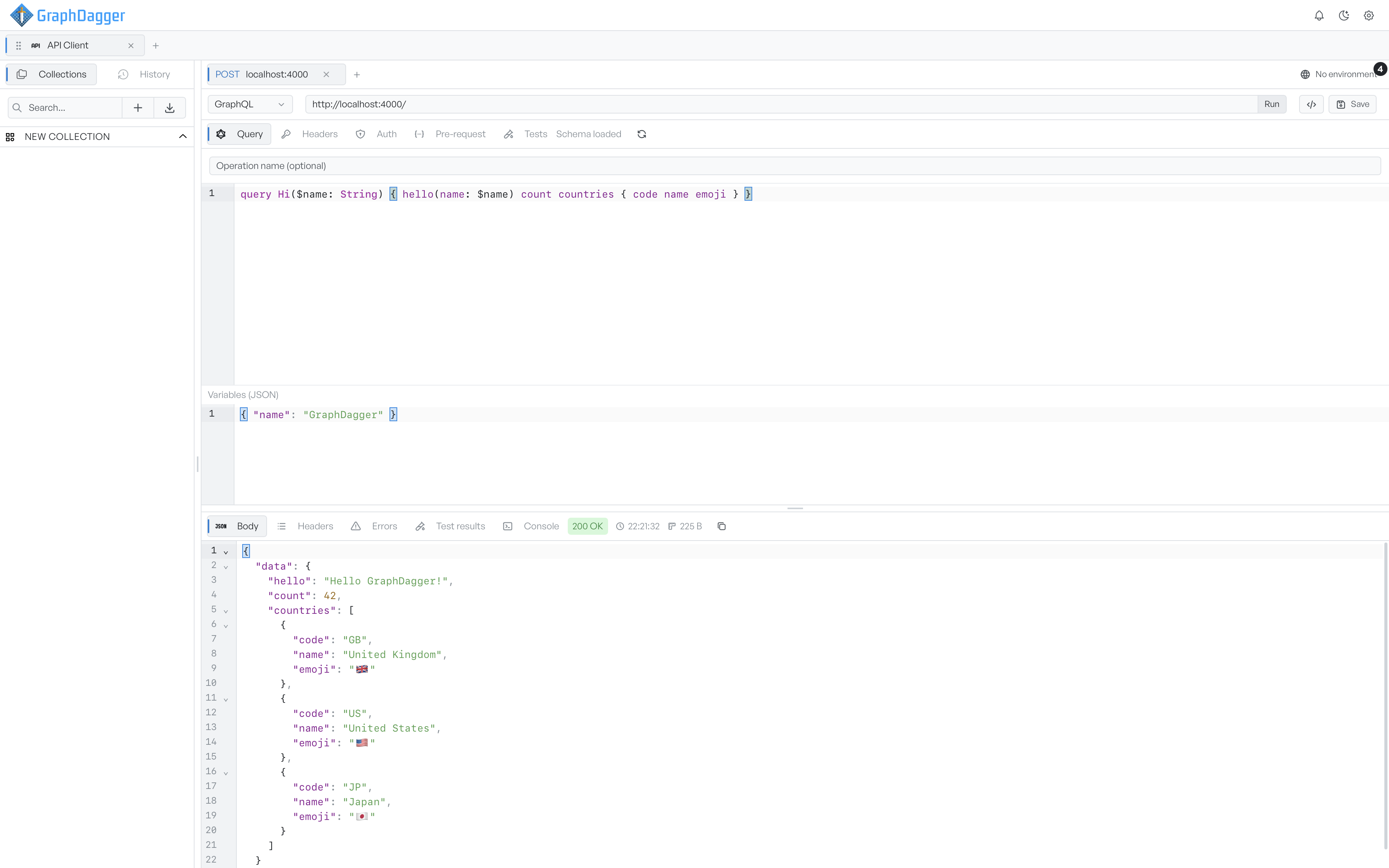
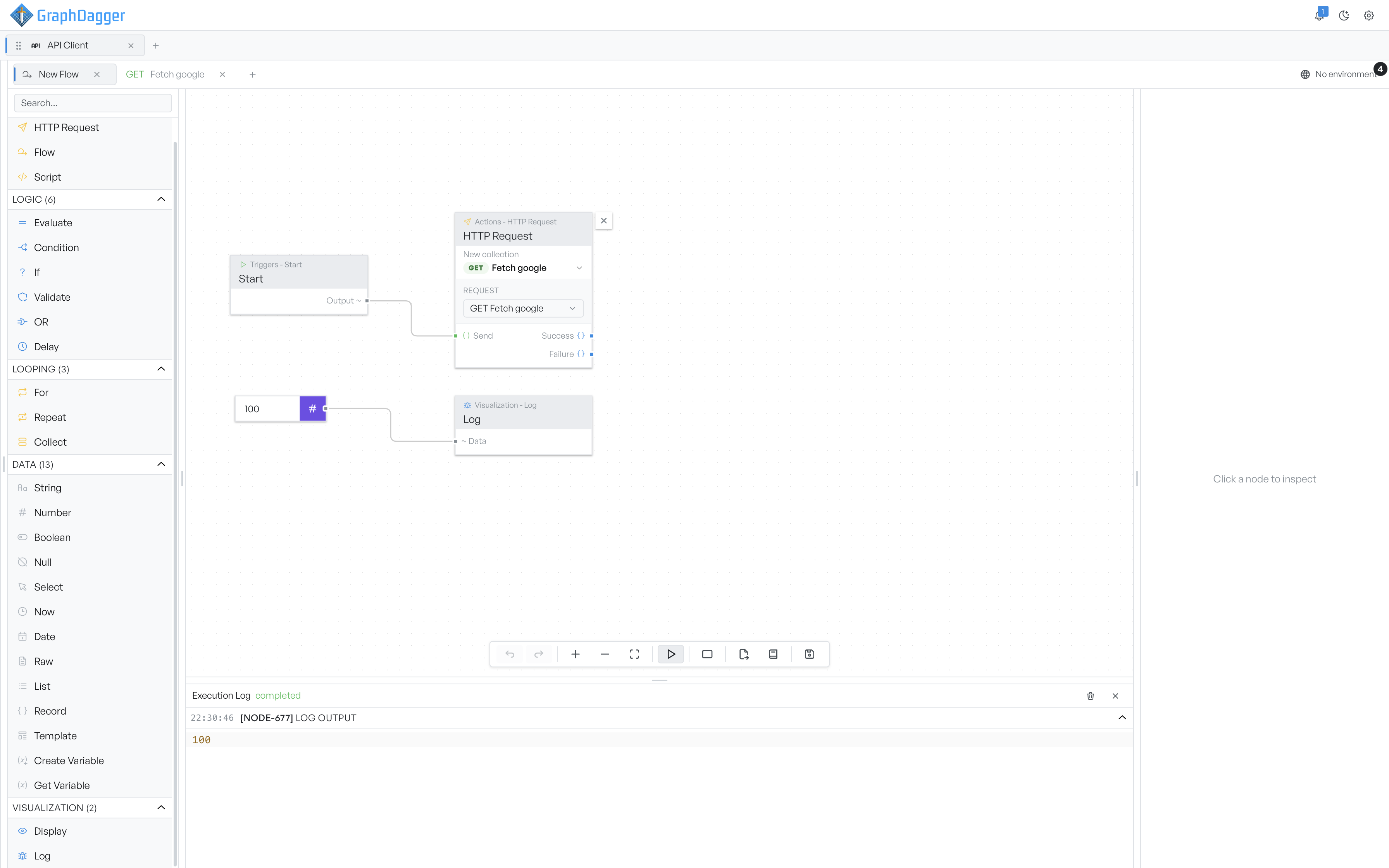
Explore the full tool: API Client in GraphDagger
More than a Postman replacement
An API client sits in the middle of a bigger loop: the traffic you captured is where the request came from, and the token you decode explains the 401. GraphDagger keeps the loop in one window.
- Web Debugger to capture real traffic and replay it through the client
- Auth Inspector to decode and verify the tokens your APIs mint
- Mock server and visual request flows included
- Environments, cookies and history, all stored locally
- One licence covers all 14 tools
When to stay with Postman
If your organisation runs on Postman's collaboration layer, shared cloud workspaces, published API documentation and team libraries maintained in Postman itself, that platform is the product, and a local-first client will not replace it. GraphDagger fits engineers who want the client without the platform.
How the licence compares
Postman is free for basic use with paid team tiers for the cloud platform. GraphDagger is a single paid subscription with no tiers, and it buys the API client together with 13 other tools rather than seats on a platform.
Frequently asked questions
- Can I import my Postman collections?
- Yes. The API Client imports Postman collections directly, along with Insomnia exports, OpenAPI definitions, cURL commands and HAR files, so existing work carries over.
- Does GraphDagger require an account like Postman?
- No account, no workspace, no sync prompt. Collections, environments, cookies and history are stored on your machine, which also means they never transit anyone else's cloud.
- Does it support GraphQL, gRPC and WebSocket?
- Yes: HTTP, GraphQL, WebSocket, SSE and gRPC are all first-class request types, with pre-request and test scripts running in a sandbox and code generation for 19 languages.
- Can it mock an API while I build against it?
- Yes, a mock server is built in, and the visual flow builder chains requests together when a scenario needs more than one call.
- Is there a free trial?
- Yes, 14 days with every tool unlocked. Checkout starts the trial, nothing is charged while it runs, and cancelling before day 14 costs nothing.
Related comparisons
The client without the cloud
Start the 14-day free trial, import your Postman collections and keep working, locally. Nothing is charged during the trial.